It is not generally known that the famous philosopher Ludwig Wittgenstein
(1889 — 1951) was an early researcher into the aerodynamics
of flight. His first research post was at the University
of Manchester (then known as Owens College) in the summer of 1908,
when he moved to a kite-flying station at Glossop (near Manchester).
In return for “constructing, sending up, and recovering the
instrument-bearing kites” used for meteorological observation,
he would get to use the equipment there for his own kite research.
Apparently he was inexperienced, for he wrote home from Glossop
that he first observed and then learned how to make a kite.
The work at the station was arduous and continuous. Sometimes
there would be eight or ten ascents a day until as late as 9pm
or 10pm. The kites would be sent up as high as 5,000 feet
(naturally this demanded a train of kites). Sometimes the kites
would escape or come down and then a correspondingly long distance
would have to be traversed over rough pathless heather moors to
recover them. The
winch system used for that instrument-carrying kite system may
well have been Cody's man-carrying kite system, and Cody likewise
became interested in solving the problem of heavier-than-air flight
through such inventions.
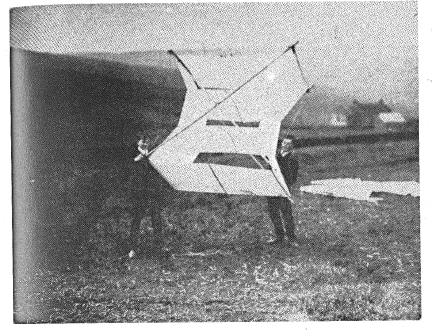
The photograph above shows Wittgenstein (on the right) with his close
friend and mentor William Eccles and the instrument-bearing kite
on the moors above Glossop in the summer of 1908.
The story of this period of Wittgenstein's life is well researched
and well told in Wittgenstein Flies a Kite by Susan Sterrett
(Pi Press, New York: 2006), though the book is mainly concerned
with his more successful and ground-breaking research into the
philosophy of language.


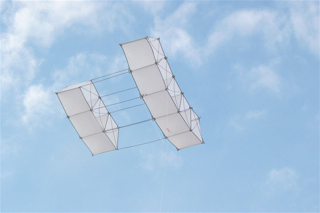
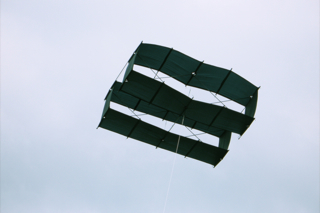
It is not generally known that the famous philosopher Ludwig Wittgenstein (1889 — 1951) was an early researcher into the aerodynamics of flight. His first research post was at the University of Manchester (then known as Owens College) in the summer of 1908, when he moved to a kite-flying station at Glossop (near Manchester). In return for “constructing, sending up, and recovering the instrument-bearing kites” used for meteorological observation, he would get to use the equipment there for his own kite research. Apparently he was inexperienced, for he wrote home from Glossop that he first observed and then learned how to make a kite.
The work at the station was arduous and continuous. Sometimes there would be eight or ten ascents a day until as late as 9pm or 10pm. The kites would be sent up as high as 5,000 feet (naturally this demanded a train of kites). Sometimes the kites would escape or come down and then a correspondingly long distance would have to be traversed over rough pathless heather moors to recover them. The winch system used for that instrument-carrying kite system may well have been Cody's man-carrying kite system, and Cody likewise became interested in solving the problem of heavier-than-air flight through such inventions.
The photograph above shows Wittgenstein (on the right) with his close friend and mentor William Eccles and the instrument-bearing kite on the moors above Glossop in the summer of 1908.
The story of this period of Wittgenstein's life is well researched and well told in Wittgenstein Flies a Kite by Susan Sterrett (Pi Press, New York: 2006), though the book is mainly concerned with his more successful and ground-breaking research into the philosophy of language.